
The French heritage includes over 45,000 classified or listed monuments, thousands of artisanal know-how, and one of the densest networks of museums in the world. This heritage mass lives to the rhythm of budgetary decisions, archaeological discoveries, and international recognitions that redraw the map of what is protected, restored, or threatened each year. Recent news highlights several tensions: a decrease in public funding, increased security for collections, and new UNESCO listings.
Decrease in State Funding for Historical Monuments in 2026
An information report from the Senate Culture Committee, published on July 21, 2026, provided a clear diagnosis. After a budget peak reached in 2025, the funds allocated in the 2026 finance law for historical monuments fall by 34% in commitment authorizations and 21% in payment credits.
This contraction directly affects ongoing restoration projects, particularly on rural buildings for which municipalities cannot compensate for the state’s withdrawal alone. The Senate report proposes two structural avenues: elevating heritage protection to the status of principle of constitutional value and creating a Ministry of Heritage and Tourism, to give the sector an autonomous political backing.
To closely monitor these developments, Cultivons nos Racines articles regularly cover local and national initiatives related to the preservation of French heritage.

National Security Plan for Museums and Heritage Sites
Repeated thefts in several museums led Culture Minister Catherine Pégard to announce, on July 27, 2026, a national security plan for heritage establishments and cultural property conservation sites. The plan is based on four concrete pillars.
- A national mapping identifying 3,127 sites deemed most vulnerable, classified by risk level to prioritize interventions.
- The creation of a security fund endowed with 30 million euros over three years, intended to finance alarms, video surveillance, and access controls.
- The possibility of transferring the most threatened works to secure “refuge sites,” a mechanism that did not exist until now in the French regulatory framework.
- Regular audits conducted at least every five years by the Security, Safety, and Audit Mission (MISSA).
This plan marks a change in approach. Until now, the security of collections largely fell to each establishment, without centralized coordination or uniform evaluation criteria. The national mapping imposes a common framework that will allow for comparison of protection levels between sites of very different sizes and attendance.
French UNESCO World Heritage Listings
The year 2025 saw 25 new sites added to the UNESCO World Heritage list. Among them, two French files were successful: the D-Day beaches and the royal fortresses of Languedoc. These listings strengthen France’s position, already one of the countries with the most classified properties in the world.
The D-Day beaches carried both a memorial and heritage significance. Their listing protects not only the physical sites (Omaha, Utah, Juno, Gold, and Sword sectors) but also their historical testimony value, which imposes development constraints on the concerned coastal municipalities.
Megaliths of Southern Morbihan: One Year After Listing
One year after the entry of the megaliths of southern Morbihan into the World Heritage, the question of the impacts arises. UNESCO listing generally generates an increase in tourist attendance in the first years, but it also comes with management and conservation obligations that local authorities must absorb with sometimes limited resources.
Preventive Archaeology and Recent Discoveries
Preventive archaeology, conducted before development projects, remains the main channel for heritage discoveries in France. INRAP (National Institute for Preventive Archaeological Research) intervenes in hundreds of excavations each year, but its budget faces recurring tensions.
Among the recent discoveries reported by the media, two stand out:
- In the Vosges, archaeologists uncovered over a thousand dice made from animal bones, dating back to the 1st century. These objects, designed according to principles identical to modern dice, shed light on the gaming practices of the Gallo-Roman era.
- In Dordogne, Paleolithic paintings from the Font-de-Gaume cave, classified as World Heritage, have been accurately dated thanks to cutting-edge imaging. This technical advancement paves the way for a chronological reinterpretation of other decorated caves in Périgord.
These results illustrate a paradox: scientific capabilities are advancing, but the financial resources allocated to preventive archaeology remain under pressure. The quality of discoveries directly depends on the maintenance of systematic excavations before each development project.
Intangible Cultural Heritage: An Evolving Inventory
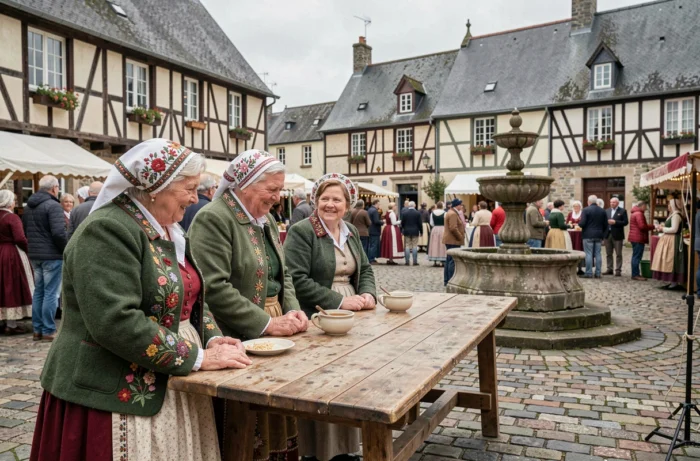
The Ministry of Culture continues to update the national inventory of intangible cultural heritage (ICH). This inventory lists the know-how, festivals, musical practices, and oral traditions considered representative of French cultural diversity.
One point deserves to be highlighted: inclusion in the national ICH inventory does not entail any binding legal protection. It constitutes a symbolic recognition and a documentation tool, but does not generate automatic funding or obligation of transmission. The sustainability of these practices therefore primarily depends on the communities that uphold them and the local authorities that choose to support them.
The tight budgetary framework of 2026, combined with new security requirements and recent international recognitions, shapes a French heritage landscape in tension between ambition and means. The decrease in state funding for historical monuments remains the most concerning signal, as it primarily affects the least visible buildings, those that do not benefit from the notoriety of a cathedral or the attendance of a UNESCO site.