
The market for massage tables offers dozens of models with very variable characteristics. Between a folding aluminum table intended for home visits and a fixed hydraulic table installed in a practice, the technical constraints diverge on almost all fronts. Choosing the best massage table for optimal comfort requires going beyond product sheets, which sometimes highlight misleading data.
Dynamic load of a massage table: the figure that product sheets do not show
Almost all manufacturers display a maximum static load. This number corresponds to the weight supported when a client is lying down, motionless, without pressure applied by the practitioner. In practice, this data does not reflect the actual conditions of use.
The dynamic load, sometimes called working weight, includes the weight of the client, the pressure from the masseur, and the movements related to the techniques used. For a classic Swedish massage, the difference between static and dynamic load remains moderate. For deep massages or joint mobilizations, the dynamic load can far exceed the static load displayed.
Recent specialized guides recommend checking if the manufacturer distinguishes between these two values. When only the static load is listed on the sheet, a safety margin should be applied, especially for practitioners who work with applied techniques. Detailed resources are available on https://latable-de-massage.fr/ to compare technical specifications between models.
Foam density of the mattress: why thickness alone is not enough
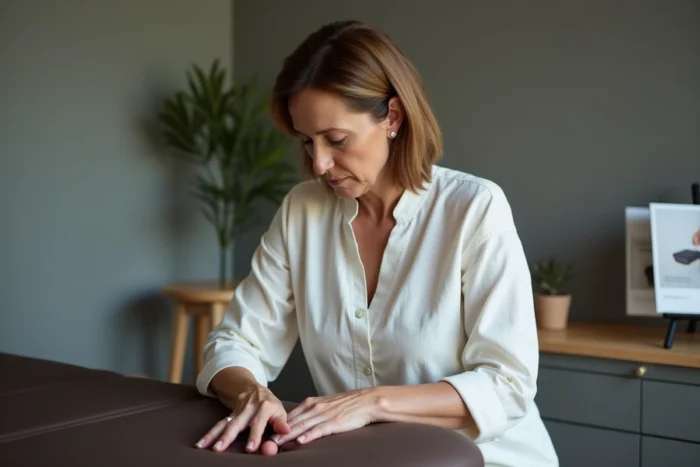
The thickness of the mattress remains the most visible criterion in commercial descriptions. A few extra centimeters of foam reassure the buyer. Field feedback varies on this point: thick but low-density foam compresses under the client’s weight after a few dozen minutes.
The density of the foam determines the maintenance of comfort during long sessions. High-density foam retains its cushioning properties throughout the duration of a session, even beyond an hour. Low-density foam, even if thick, eventually allows the rigid structure beneath the padding to be felt.
Some manufacturers now incorporate memory foam on the top layer of the mattress. This solution improves adaptation to the client’s body without sacrificing support from the lower layer. The available data does not allow for a conclusion that one type of foam consistently outperforms another, but the combination of a dense base layer and a memory foam surface layer appears in the models most highly rated by practitioners.
What to check before purchasing
- Ask for the foam density in addition to the thickness, as these two data points are independent and complementary
- Test the mattress by pressing firmly with the elbow to simulate the pressure of a deep technique during an extended session
- Check if the mattress cover allows for good heat dissipation, a parameter often overlooked that affects client comfort
Noise level of adjustment mechanisms: a criterion ignored in practice
Hydraulic or electric adjustment tables allow height to be adjusted without physical effort. The ergonomic advantage for the masseur is documented. However, one aspect goes under the radar of most buying guides: the noise generated by the adjustment mechanism during the session.
A mechanical click or an electric motor hum can break the relaxing atmosphere at the precise moment the practitioner adjusts the table. For relaxation massages or spa treatments, this sound disruption has a direct impact on the client experience.
Hydraulic mechanisms are generally quieter than electric systems, but some recent electric models have significantly reduced their noise level. Testing the mechanism in real conditions remains the only reliable method to assess this parameter, as manufacturers rarely communicate a decibel value.
Folding or fixed massage table: the choice according to actual practice
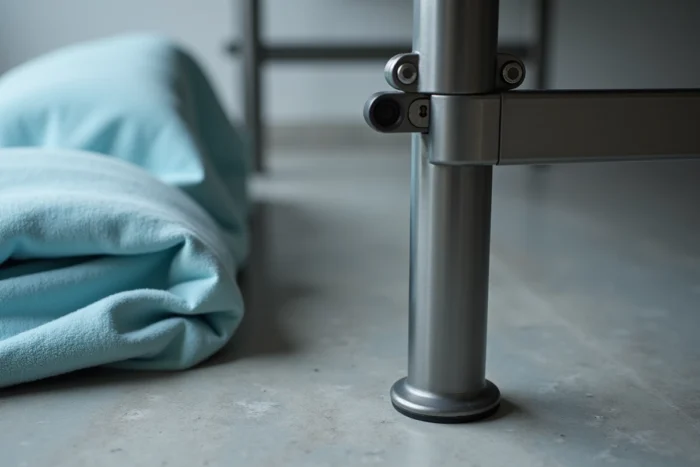
The choice between a folding table and a fixed table depends less on budget than on the context of practice. A folding aluminum table is suitable for practitioners who travel to clients’ homes. Its lightweight and compact size compensate for a mattress comfort that is often inferior to that of fixed models.
In a practice, the fixed table offers superior stability and a wider surface, making it easier to perform techniques that require lateral pressure. The width of the surface directly influences the client’s comfort and the practitioner’s freedom of movement.
Some points of caution depending on the context of use:
- For home use, prioritize a total weight that remains compatible with daily transport, ensuring that the transport cover protects the hinges
- For a shared practice, check the floor space of the fixed table and compatibility with height adjustments necessary for multiple practitioners of different sizes
- For mixed use (practice and home), some high-end folding tables offer mattresses with density comparable to fixed models, at the cost of a higher weight
Headrest and accessories: details that change the session
The quality of the headrest is often underestimated. A poorly designed headrest creates pressure points on the client’s forehead or cheekbones when in a prone position. Models with adjustable cushions in inclination and depth allow for facial support to be adapted to each morphology.
Accessories (bolster, armrests, integrated towel holder) are not gadgets. They contribute to the overall comfort of the session and the efficiency of the practitioner, who spends less time improvising makeshift wedges or supports.
The best massage table is not the one that accumulates the most features. It is the one whose every component, from the foam of the mattress to the adjustment mechanism, corresponds to the techniques practiced and the context of use. Before any purchase, a test session with a real client remains more informative than any technical sheet.