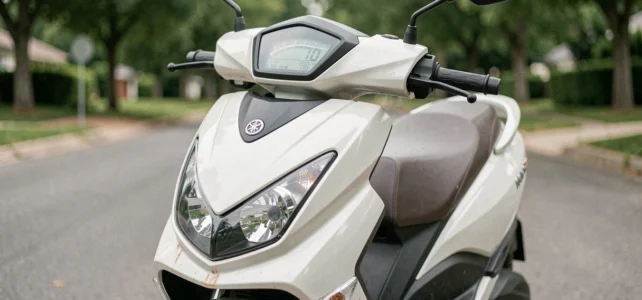
The Yamaha Xmax 125 shows performance that evolves over the kilometers. Between the dealership exit and the 10,000 km mark, the maximum speed increases, sometimes significantly, sometimes less than expected. Understanding what happens mechanically helps avoid common mistakes: pushing a new engine too hard or worrying about a speed deemed low on a scooter that has just been delivered.
Difference between speedometer and GPS on the Xmax 125: a bias that skews everything
Before discussing break-in or maximum speed, one point deserves to be made. Have you ever compared the speed displayed on your speedometer with that of a GPS app?
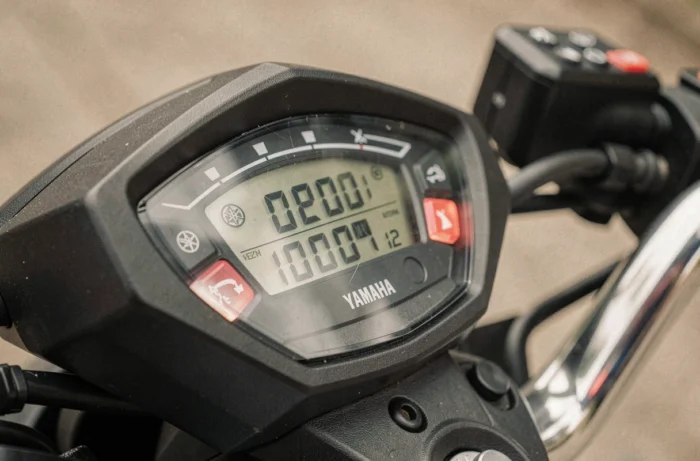
On the Xmax 125, the difference is systematic. Above 100 km/h on the speedometer, the actual speed measured by GPS is about 10 km/h lower. A speedometer reading of 115 km/h corresponds practically to about 105 km/h actual.
This discrepancy exists both on a new scooter and after 10,000 km. It does not decrease with break-in. Manufacturers intentionally incorporate this overestimation to comply with regulations, which prohibit the speedometer from displaying a speed lower than the actual speed.
Any discussion about the max speed and break-in of the Xmax 125 benefits from distinguishing these two measurements. Testimonials on forums often mix the two, making comparisons misleading.
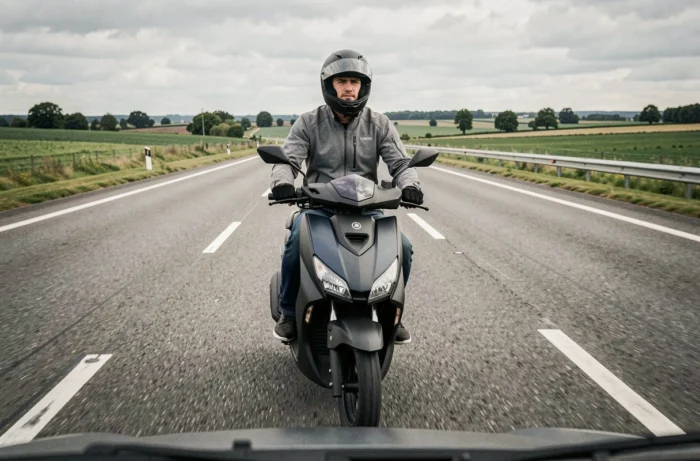
Xmax 125 during break-in: what limits speed in the first 1,000 km
Yamaha recommends not pushing the engine to full throttle during the first 1,000 kilometers. This guideline is based on a simple mechanical principle: the internal parts of the engine (rings, cylinder, valves) are not yet perfectly adjusted.
What happens concretely in the engine
During the first kilometers, the metal surfaces wear against each other. The micro-roughness left by machining gradually disappears. This natural polishing reduces internal friction.
By riding progressively, without maintaining a fixed RPM for too long, we allow this process to occur evenly. A properly broken-in engine generates less internal resistance, freeing up available power for the rear wheel.
Typical speed during this phase
On a new Xmax 125, the maximum speed remains limited by mechanical friction. On the speedometer, many owners report a peak around 105 to 110 km/h at the end of the break-in period. In actual GPS speed, this corresponds to about 95 to 100 km/h on flat ground.
The acceleration is also slower. The scooter takes longer to reach its peak speed, especially uphill or with a passenger.
Xmax 125 after 10,000 km: the performance plateau of the broken-in engine
Once the break-in is complete and the first services have been performed, the maximum speed increases. The gain is especially noticeable between 1,000 and 3,000 km, after which improvements become more subtle.
After 10,000 km, a well-maintained Xmax 125 generally reaches 115 to 120 km/h on the speedometer, or about 105 to 110 km/h actual. This ceiling corresponds to the limit of the 125 cc category, imposed by the engine’s displacement and power (around 9 kW on Euro 5+ versions).
Why some Xmax models top out lower
Several factors explain why a scooter at 10,000 km may not reach the same speed as another of the same model:
- The maintenance of the transmission (belt, rollers, air filter) directly affects the engine’s ability to rev up. Worn rollers or a clogged filter can cost several km/h.
- The weight carried changes the equation. With a passenger and a loaded top case, the loss of top speed can reach around ten km/h on the speedometer.
- The quality of the initial break-in plays a lasting role. An engine pushed too hard during the first kilometers may retain higher-than-normal internal friction.
Euro 5+ versions of the Xmax 125: a slightly different ceiling
The Xmax 125 sold since 2023 complies with the Euro 5+ standard. This standard imposes stricter emission constraints, which have a concrete effect on performance.
The power claimed by Yamaha for these versions is 12 horsepower (9 kW) with a torque of 11 Nm at 6,000 rpm. Compared to previous generations, the acceleration is more gradual and the top speed slightly lower.
Owners comparing their recent Xmax to older testimonials found on forums sometimes notice a discrepancy. This is not a defect. It is the direct consequence of engine depollution, which redistributes the power curve in a more linear fashion.
Maintenance after break-in: actions that preserve the maximum speed of the Xmax 125
The first oil change, performed around 1,000 km, removes the metallic particles generated during break-in. This is a crucial moment for the engine’s longevity.
Beyond that, a few regular operations condition the maintenance of performance:
- Replace the air filter according to the intervals recommended by Yamaha. A saturated filter reduces air intake and decreases power.
- Check the transmission belt and rollers. Their wear translates into a loss of acceleration and top speed.
- Adhere to oil change intervals to maintain effective lubrication of internal parts.
A regularly serviced Xmax 125 retains its performance beyond 10,000 km. Conversely, neglected maintenance can cost several km/h in top speed without the owner realizing it immediately.
The speed ceiling of the Xmax 125 is not a mystery, but it depends on variables that each rider controls: the rigor of break-in, the regularity of maintenance, and a clear reading of the speedometer. The 125 cc category imposes its physical limits, and expectations should remain calibrated accordingly.