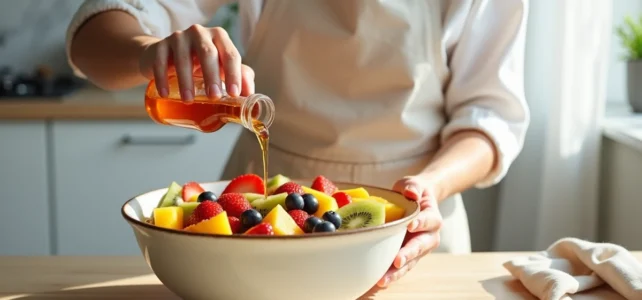
You’ve just cut your fruits, the bowl is ready, and one question arises: what liquid should you pour over it? This choice changes the texture, taste, and even the shelf life of your fruit salad. Whether it’s freshly squeezed orange juice, homemade syrup, or a splash of rum, each option produces a different result on fresh fruits.
Oxidation of fruits: the chemical role of the liquid in your salad
Before thinking about taste, consider what happens to a cut banana or apple after twenty minutes. The flesh browns when exposed to air. This phenomenon is called enzymatic oxidation.
The liquid you pour over your fruits slows down this process. An acidic juice protects fruits from browning much better than a sweet syrup. Lemon juice remains the reference, but orange juice or grapefruit juice also work due to their natural acidity.
When choosing between alcohol or juice for fruit salad, the question of preservation often takes a back seat. Alcohol (rum, Grand Marnier, port) also has a slight preservative effect, but its acidity is lower. For a salad prepared several hours in advance, it’s better to rely on a citrus juice base, adding the alcohol at serving time.
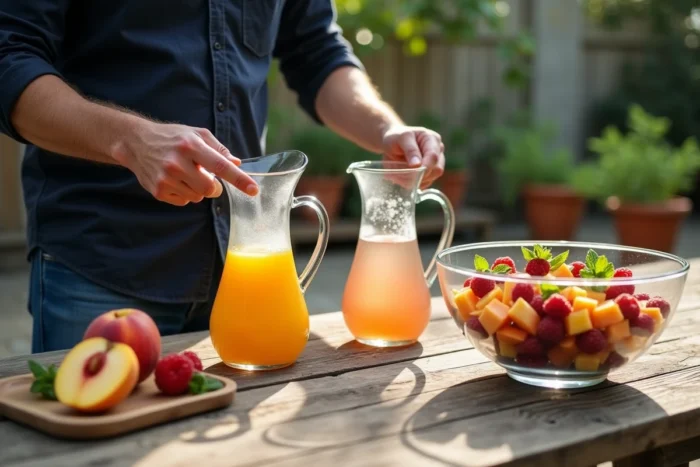
Syrup, freshly squeezed juice, or flavored water: which non-alcoholic liquid for fruit salad
Have you noticed that some fruit salads are swimming in a liquid that’s too sweet, almost syrupy? This is often due to an excess of syrup or using canned pineapple juice as is. Here are the main non-alcoholic options and what they really bring.
- Diluted lime or lemon juice: sharp acidity, maximum protection against browning. Use the juice of one lemon for a bowl serving four to six people, diluted with a bit of water if the acidity is too pronounced.
- Freshly squeezed orange juice: adds natural sugar and a roundness on the palate. Works particularly well with strawberries, kiwi, and mango.
- Homemade light syrup: water heated with sugar (or honey) and an aromatic like vanilla, fresh ginger, or star anise. Pour it warm, never boiling, over the fruits. The warm syrup speeds up the release of aromas without cooking the fruits.
- Orange blossom water or rose water: a few drops are enough. These floral waters add flavor without adding sugar, but their taste can be divisive. Test with a teaspoon before pouring more.
The classic trap: drowning the fruits. The liquid should coat, not overwhelm. Two to three tablespoons per serving is sufficient in most cases.
Combining two liquids for more complexity
A base of freshly squeezed orange juice with a tablespoon of vanilla syrup yields a more interesting result than using a single liquid in large quantities. The vanilla softens the acidity of the citrus, and the sugar from the syrup compensates for any bitterness in the juice.
Fresh grated ginger infused in a light syrup, then mixed with lime juice, works very well with tropical fruits (mango, pineapple, passion fruit). Combining an acidic element and a sweet element balances the salad.
Rum, port, or liqueur: when alcohol changes the fruit salad
Alcohol does not play the same role as juice. It acts as a flavor enhancer. Ethanol is a solvent that releases aromatic compounds that water alone cannot capture. In simple terms, a tablespoon of amber rum on fresh fruits brings out notes you wouldn’t perceive otherwise.
Some concrete guidelines:
- Amber rum: the classic for exotic salads. One to two tablespoons for four people, added at the last moment. Beyond that, the alcohol overwhelms the fruits.
- Red port: sweeter and less alcoholic than rum, it adds a sweet roundness that suits red fruits and figs.
- Grand Marnier or Cointreau: these orange-based liqueurs complement citrus without masking them. A tablespoon is sufficient.
- Kirsch: dry and strong, it pairs well with cherries and stone fruits. Use sparingly.
Alcohol is always added at the end of preparation, ideally fifteen to thirty minutes before serving. If you pour it too early, it softens the fruits and loses its volatile aromas.
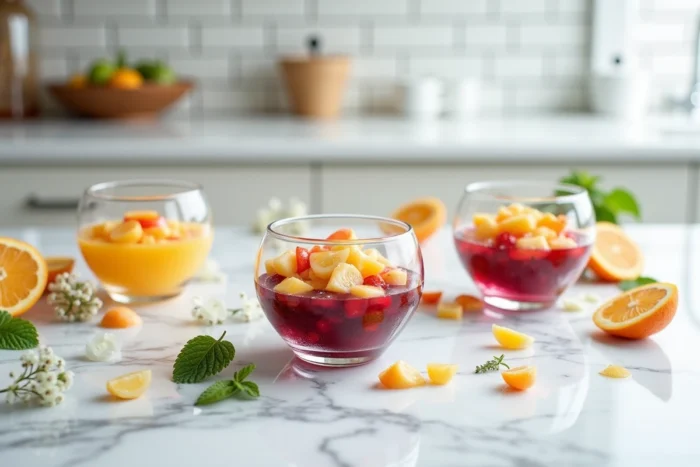
Adapting the choice to the guests
As soon as a child, a pregnant woman, or a non-drinker is at the table, the question is settled: stick to juice or syrup. Alcohol does not evaporate from a cold fruit salad, contrary to a common misconception related to dishes cooked for a long time in the oven.
A practical solution is to prepare the salad with citrus juice, then offer a small bottle of rum or liqueur on the side. Each guest can dose it to their liking.
Seasonal fruits and liquid: the pairings that work
Not all liquids go with all fruits. Instead of providing an exhaustive list, here are three tested and reliable combinations.
In summer, strawberries, peaches, and apricots gain freshness with lime juice and a few chopped mint leaves. Fresh mint effectively replaces sugar to give a sensation of freshness without extra calories.
In winter, citrus fruits (blood orange, grapefruit, clementine) pair well with a cinnamon and star anise syrup. These spices warm up the aromatic profile of already acidic fruits.
For exotic fruits (mango, papaya, pineapple, passion fruit), coconut milk mixed with lime juice serves as an alternative to syrup. The fat from the coconut rounds out the acidity of the lime and recalls desserts from Southeast Asia.
The choice of liquid thus depends as much on the selected fruits as on the people around the table. Freshly squeezed citrus juice remains the most versatile base, with or without a splash of alcohol added at the last moment. The only mistake to avoid: pouring excess liquid. It’s better to add a little at serving than to find soggy fruits at the bottom of the bowl.