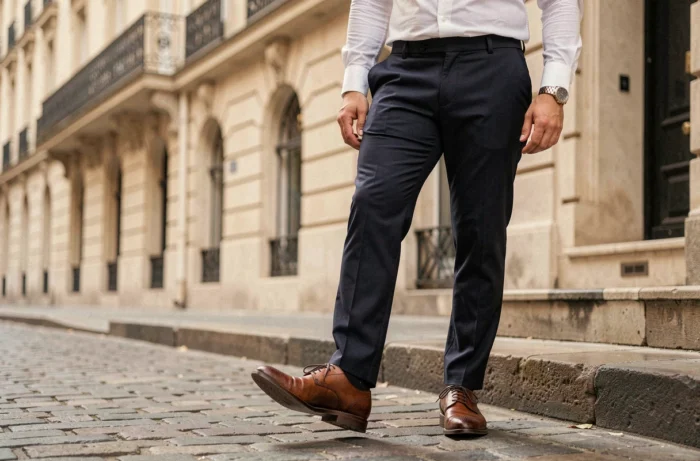
When looking for a pair of derbies or boots for the office, the common reflex is to filter by price on a general marketplace. The problem is that you often end up with leather of unclear origin, assembled far from any traceable quality control. Several French brands now offer men’s shoes that combine domestic manufacturing, sourced leather, and verifiable environmental commitments.
ESPR Regulation and Anti-Fast Fashion Law: What Changes for Shoes in France
Since September 1, 2026, the French law known as “ultra fast fashion” (law n° 2026-602 of July 8, 2026) imposes penalties on textile and shoe products under the extended producer responsibility (EPR) framework. In practical terms, brands that renew their collections at an excessive rate face a financial penalty on each pair sold in the French market.
At the same time, the European regulation ESPR (Ecodesign for Sustainable Products Regulation), adopted on April 25, 2024, provides for the gradual prohibition of destroying unsold items for new textiles and shoes. Donation, reuse, or recycling becomes mandatory for unsold stock.
For a buyer, these two texts have a direct consequence: French brands that already practiced small-batch production or made-to-order manufacturing find themselves at an advantage. Their economic model, sometimes seen as a militant choice, becomes a competitive edge against competitors subject to these new penalties. Several of these manufacturers can be found in this list of French shoes for men that details their respective commitments.
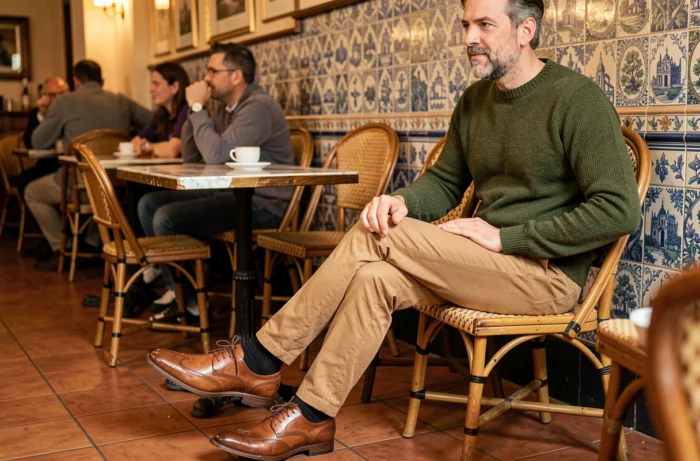
Goodyear Construction and Vegetable-Tanned Leather: Technical Guidelines for Choosing
On a product sheet, two technical criteria separate a durable shoe from a disposable model: the type of construction and the origin of the leather.
Goodyear Construction, a Resole Standard
Goodyear construction involves stitching the outsole to a welt, which is itself attached to the upper. The practical advantage is simple: a pair made with Goodyear can be resoled multiple times, extending its lifespan by several years. J.M. Weston, founded in 1891 in Limoges, has built its reputation on this technique. Each pair goes through several hundred manual operations in its historic workshops.
Other French houses like Paraboot (Norwegian construction) or Maison Hardrige use comparable sewing techniques. The common point: the sole is not glued, it is stitched, making repair possible and economically viable.
Vegetable-Tanned Leather vs. Chrome Tanning
Vegetable tanning uses bark tannins (oak, chestnut) instead of chrome salts. The process is longer, but it produces leather that develops a patina over time instead of cracking. For dress models (derbies, oxfords), this patina is both an aesthetic asset and an indicator of quality.
Feedback varies on this point: some vegetable-tanned leathers require more regular maintenance, particularly conditioning with wax every two to three months. It’s a trade-off between visual appeal and practicality.
Four Profiles of French Brands Based on Use
Rather than listing dozens of names, we distinguish four concrete use cases that guide the choice.
Dress Shoes for Daily Office Use
J.M. Weston and Maison Hardrige target this niche with full-grain leather derbies and oxfords. The price positioning is high for Weston, more accessible for Hardrige. In both cases, the stitched construction allows for resoling, justifying the investment over several years.
Made in France Sneakers for a Casual Style
1083, based in Ardèche, offers sneakers made in France with traceable materials (organic cotton, French leather). Veja, often associated with made in France for its design, uses Amazonian rubber and chrome-free tanned leather. Both brands cater to an urban daily use where one wants a casual style without sacrificing traceability.
Boots and Ankle Boots for Versatile Use
Paraboot manufactures models like the Michael or the Chambord in Izeaux (Isère), recognized for their robustness in wet conditions. Norwegian stitching ensures superior waterproofing compared to gluing. These models transition from the office to the weekend without changing pairs.
Moccasins for Warm Seasons
The 180 moccasin from J.M. Weston remains a reference in the French men’s wardrobe. Worn without socks in summer, it combines formal elegance and comfort thanks to a soft leather sole. Other manufacturers like Le Formier offer moccasins made in France at more affordable prices.

Check the Responsible Commitments of a Shoe Brand
The word “responsible” on an e-commerce site guarantees nothing in itself. Here are the concrete elements to check before buying:
- The precise place of manufacture (city and workshop), not just “Made in France” without an address. Serious brands name their workshops: Limoges for Weston, Izeaux for Paraboot, Romans-sur-Isère for several manufacturers
- Compliance with EPR and any eco-score displayed, made mandatory by French regulations for new shoes sold in the territory
- The policy for managing unsold items: donation, regulated destocking, or recycling, in accordance with the ESPR regulation that gradually prohibits destruction
- The possibility of resoling or repairing, offered directly by the brand or through a network of partner cobblers
A named workshop and a resoling service are worth more than a self-proclaimed label. Brands that invest in the repairability of their products align their economic model with new regulatory constraints, rather than simply placing a green logo on their homepage.
The French market for men’s shoes is undergoing a regulatory reorganization that favors local manufacturers who control their production chain. For a buyer, the most reliable criterion remains transparency about the place of manufacture and the concrete possibility of having their pair repaired. It is on these two points that the difference between a truly responsible shoe and a mere marketing argument is made.