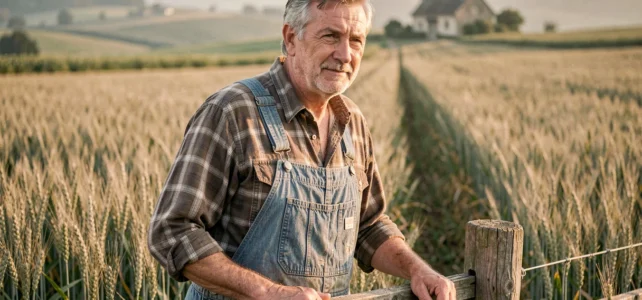
The French rural law does not recognize the term “farmer” as an autonomous professional status. It refers to a mode of land tenure, not a profession. Confusing the two terms amounts to conflating a legal regime of operation with a professional qualification, which distorts any interpretation of the applicable texts.
Status of farming and lease: the legal framework of the farmer
The farmer is legally a rural leaseholder. They operate agricultural land or buildings under a lease subject to the farming status, codified in Book IV of the Rural Code. The rent paid to the owner, called farming rent, is paid in cash.
The minimum duration of this lease is nine years, renewable by tacit agreement. The leaseholder benefits from a right to renewal and a right of first refusal in the event of a sale of the land. These protections, inherited from the 1946 status, aim to stabilize the operator on the rented land.
When discussing the definition of a farmer and a leaseholder, the central distinction lies in the relationship to the land: the farmer leases, the owner-operator holds. Both can engage in exactly the same agricultural activity on a daily basis.
The lease differs from a sharecropping agreement, where the rent is paid in kind (a portion of the harvest). It also differs from the environmental rural lease, which adds clauses for cultural practices. The strict sense of a farmer is one whose contract falls under the classic farming status.
Farmer according to the Rural Code: agricultural activity and article L.311-1
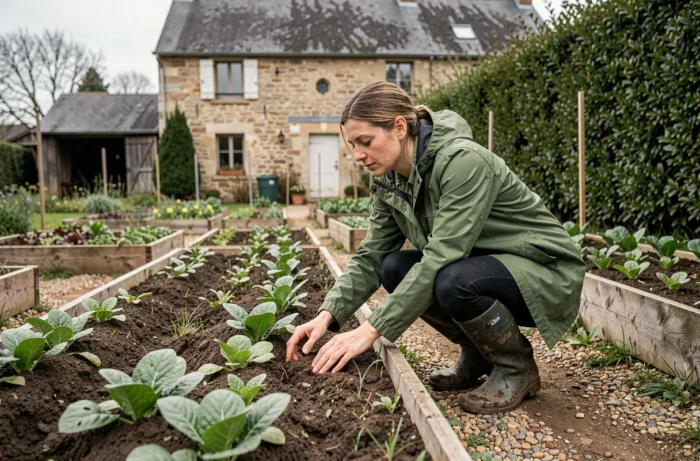
The farmer is defined by their activity, not by their relationship to the land. Article L.311-1 of the Rural Code establishes the fundamental criterion: any activity corresponding to the mastery and exploitation of a biological cycle of a plant or animal nature, as well as activities that constitute its extension (processing, packaging, direct sales) is considered agricultural.
This definition has a direct consequence: a farmer can be an owner, a leaseholder, a sharecropper, or a partner in a company. The land status is indifferent. What matters is the effective mastery of the biological cycle.
Recent texts also reason in terms of “agricultural operator” rather than “farmer” in the common sense. The operator can be a natural person, but also a company: EARL, GAEC, agricultural SAS. The legal form does not change the agricultural qualification of the activity, as long as the biological cycle criterion is met.
Agricultural activity by attachment
The Rural Code also recognizes agricultural activities by attachment. A farmer who transforms their milk production into cheese remains a farmer, provided that the raw material comes from their operation. Agritourism (farm accommodation, educational visits) also falls within this scope when it extends the main activity.
This attachment is strategic for taxation, social protection (MSA), and access to CAP aids. Loss of agricultural qualification means shifting to the commercial or artisanal regime, with significant consequences in contributions and eligibility for public support.
Farmer, agriculturalist, peasant: the confusions of everyday vocabulary
Everyday language overlaps three terms that the law clearly separates. The peasant has no legal existence in French law. The term refers to a cultural identity and a relationship to the territory, not to a status.
- The farmer is defined by their activity (mastery of a biological cycle), regardless of their mode of land tenure.
- The leaseholder is defined by their lease contract (lease with cash rent), irrespective of the type of production.
- The peasant is a sociological and political term, claimed by certain unions and movements, but absent from the Rural Code.
- The agricultural operator is the encompassing administrative term used by the MSA, agricultural chambers, and CAP forms.
A leaseholder is therefore always a farmer (they master a biological cycle), but a farmer is not always a leaseholder: they may own their land. The relationship between the two terms is one of inclusion, not equivalence.
Corporate form and land status: why the distinction fades in practice
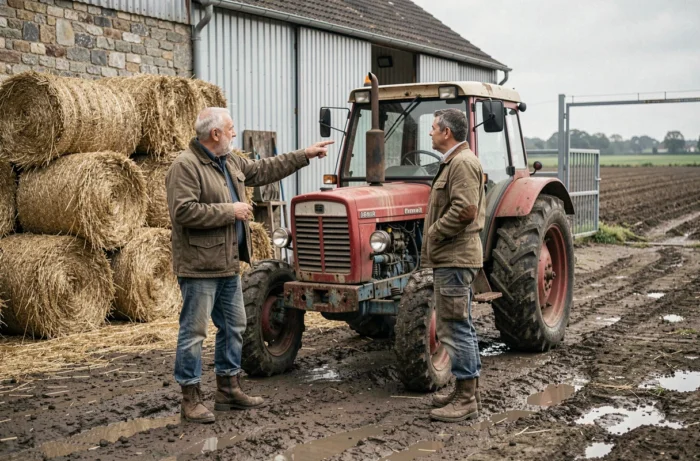
The rise of corporate forms blurs the boundary between owner farmer and leaseholder. An EARL or a GAEC can own part of the land and lease the rest under a farming lease. The same operator is then simultaneously an owner and a leaseholder depending on the plots.
The agricultural SAS, whose use is growing, illustrates this evolution. Article L.311-1 of the Rural Code applies without distinguishing the legal form. The company is the operator, and the farming lease is concluded in the name of the company, not of the operating partner as a natural person.
We observe that this complexity makes the distinction between leaseholder and farmer increasingly less effective at the operational level. It remains relevant in terms of land and contractual aspects, but it no longer conveys anything about the productive reality.
Consequences on the right of first refusal
The leaseholder’s right of first refusal, provided for by the farming status, is exercised when the owner sells the leased land. This right belongs to the leaseholder, whether they are a natural person or a company. In contrast, a farmer who owns their plots has no comparable right of first refusal on neighboring lands, except through the intervention of the SAFER.
- The individual leaseholder directly exercises their right of first refusal.
- The corporate leaseholder (EARL, GAEC, SAS) exercises it through their legal representatives.
- The owner-operator does not have this protective mechanism over their own land.
The distinction between leaseholder and owner farmer thus retains a concrete impact in terms of land transactions and retention on the operated lands. It is there, in the relationship to the land and not in the nature of the activity, that the difference produces its most tangible legal effects.